
Building an Effective Environmental Monitoring Program for Your Compounding Pharmacy
Published by LabCertTech LLC | Houston, Texas
For compounding pharmacies operating under USP 797, an Environmental Monitoring (EM) program is not optional — it is a fundamental requirement of your quality system. But beyond being a regulatory checkbox, a well-designed EM program is one of your most powerful tools for protecting your patients, your staff, and your facility from the consequences of microbial contamination.
So what does an effective environmental monitoring program actually look like? And how do you build one that satisfies USP 797 requirements and holds up under state board of pharmacy scrutiny? This guide breaks it all down.
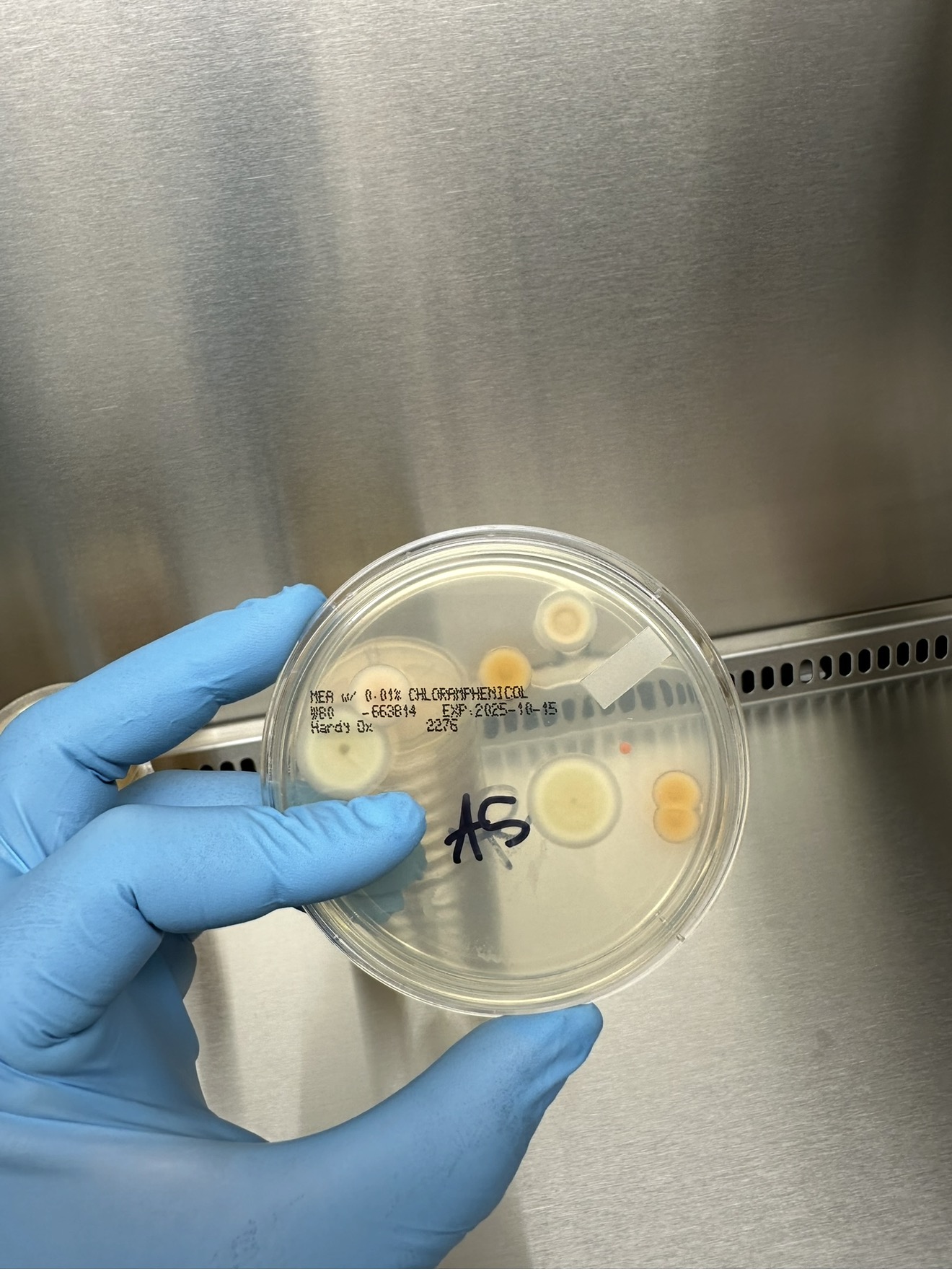
LabCertTech providing environmental monitoring and microbial sampling services in Houston, Texas
What is an Environmental Monitoring Program?
An Environmental Monitoring program is a systematic, documented process for regularly sampling the air and surfaces in your compounding environment to detect and quantify microbial contamination. The goal is to verify that your cleanroom, buffer room, ante-room, and primary engineering controls are maintaining acceptable levels of microbial cleanliness on an ongoing basis — not just at your 6-month certification visit.
Think of your EM program as the ongoing health monitoring system for your cleanroom environment. Your 6-month certification tells you how your cleanroom is performing mechanically. Your EM program tells you whether your environment is actually staying clean between those certification visits.
What Does USP 797 Require for Environmental Monitoring?
The 2023 revision to USP 797 significantly strengthened environmental monitoring requirements. Here’s what your facility must have in place:
| Requirement | Category 1 | Category 2 |
|---|---|---|
| Viable air sampling | Every 6 months | Monthly minimum |
| Surface sampling | Every 6 months | Monthly minimum |
| Gloved fingertip sampling | Initially and annually | Initially and every 6 months |
| Written EM SOP | Required | Required |
| Action level documentation | Required | Required |
| Trending analysis | Required | Required |
📋 Important: Category 2 compounding facilities must perform viable air and surface sampling at least monthly — not just at their 6-month certification visit. Many facilities are cited during inspections because they only sample at certification time and have no monthly EM records.
The 7 Essential Components of an Effective EM Program
1. Written Environmental Monitoring SOP
Every EM program must be supported by a detailed written Standard Operating Procedure (SOP) that defines:
- Sampling locations for viable air and surface sampling
- Sampling frequency for each location and sample type
- Sampling methods and equipment to be used
- Action levels for each ISO classified area
- Corrective action procedures when action levels are exceeded
- Documentation and record retention requirements
- Personnel responsibilities for EM activities
2. Defined Sampling Locations
Your EM program must include sampling at defined locations in every ISO classified area of your compounding suite:
- ISO 5 zone — inside the primary engineering control at the critical work site
- ISO 7 buffer room — multiple locations throughout the room including near the PEC, near the door, and at representative work areas
- ISO 8 ante-room — multiple locations throughout the room
- High-touch surfaces — door handles, pass-through chambers, work surfaces, equipment exteriors
3. Appropriate Sampling Methods
USP 797 requires both viable air sampling and surface sampling using validated methods:
- Viable air sampling — using a calibrated impaction air sampler (such as an RCS or SAS sampler) with appropriate growth media
- Surface sampling — using contact plates (RODAC plates) or sterile swabs with appropriate growth media
- Gloved fingertip sampling — personnel press gloved fingertips onto contact plates immediately after garbing
4. USP 797 Action Levels
Your EM SOP must define action levels for each ISO classified area. When results exceed these levels, immediate investigation and corrective action are required:
| ISO Classification | Air Sample Action Level | Surface Sample Action Level |
|---|---|---|
| ISO 5 | Greater than 1 CFU/m3 | Greater than 1 CFU/plate |
| ISO 7 | Greater than 10 CFU/m3 | Greater than 5 CFU/plate |
| ISO 8 | Greater than 100 CFU/m3 | Greater than 50 CFU/plate |
5. Corrective Action Procedures
When EM results exceed action levels your facility must have documented procedures for responding promptly and effectively:
- Stop compounding operations in the affected area immediately
- Investigate the source of contamination — review cleaning procedures, personnel garbing, HVAC performance, and traffic patterns
- Perform enhanced cleaning and disinfection including sporicidal agent application
- Re-sample to verify contamination levels have returned to acceptable limits
- Consider quarantine of any preparations compounded during the exceedance period
- Document all findings, corrective actions taken, and re-sampling results
- Conduct root cause analysis to prevent recurrence
⚠️ Critical reminder: Every action level exceedance — and every corrective action taken — must be fully documented and retained as part of your quality records. Inspectors will ask to see your exceedance history and the corrective actions you took. Missing documentation is just as serious as the exceedance itself.
6. Trending Analysis
USP 797 requires that EM results be trended over time to identify patterns that might indicate a developing contamination problem before it reaches action level. Effective trending includes:
- Maintaining a log or spreadsheet of all EM results by location and date
- Graphing results over time to visually identify upward trends
- Establishing alert levels below action levels to trigger investigation before an exceedance occurs
- Reviewing trending data at defined intervals as part of your quality review process
- Correlating EM trends with other quality indicators such as cleaning records and personnel changes
7. Documentation and Record Retention
All EM activities must be thoroughly documented and records retained for the period required by your state board of pharmacy — typically a minimum of 3 years. Your EM records should include:
- Date and time of each sampling event
- Sampling locations and methods used
- Results for each sample including organism identification when growth is detected
- Pass/fail status relative to action levels
- Personnel who performed sampling
- Any action level exceedances and complete corrective action documentation
- Trending data and periodic trend reviews
Common EM Program Deficiencies Cited During Inspections
Based on common state board of pharmacy inspection findings, here are the most frequently cited EM program deficiencies:
- No written EM SOP or outdated SOP that doesn’t reflect current USP 797 requirements
- Sampling only at 6-month certification visits rather than monthly for Category 2
- Incomplete sampling — missing required locations or sample types
- No defined action levels in the EM SOP
- Action level exceedances with no documented corrective action
- No trending data or trend review process
- EM records not retained for required period
- Gloved fingertip sampling not being performed at required intervals
How LabCertTech Can Help
LabCertTech LLC provides comprehensive environmental monitoring and microbial sampling services for compounding pharmacies and healthcare facilities across Houston, Texas and surrounding areas. Our team performs viable air sampling and surface sampling at all required locations using calibrated sampling equipment and provides detailed reports documenting your EM results.
We can also help you build or update your written EM SOP to ensure it meets current USP 797 requirements — and provide the ongoing monthly sampling services that Category 2 facilities need to stay compliant between certification visits.
Ready to Strengthen Your Environmental Monitoring Program?
Contact LabCertTech today — Houston’s veteran owned laboratory certification company.
Schedule a ConsultationEnvironmental Monitoring Microbial Sampling USP 797 Compounding Pharmacy Houston TX LabCertTech