
Cleanroom Construction: Common Temperature and Humidity Challenges We See During Certification
Published by LabCertTech LLC | Houston, Texas
As cleanroom certification professionals, we visit a lot of facilities across Houston and the surrounding area. And while our job is to certify the performance of completed cleanroom environments — not to evaluate construction quality — we do see patterns. Certain design and construction decisions come up again and again as root causes of temperature and humidity compliance failures during certification.
In the spirit of sharing what we observe in the field, we wanted to put together this post highlighting some of the most common temperature and humidity challenges we see — and some of the construction-phase decisions that appear to contribute to them. We hope this is useful context for facility planners, pharmacy directors, and anyone involved in a new cleanroom construction or renovation project.
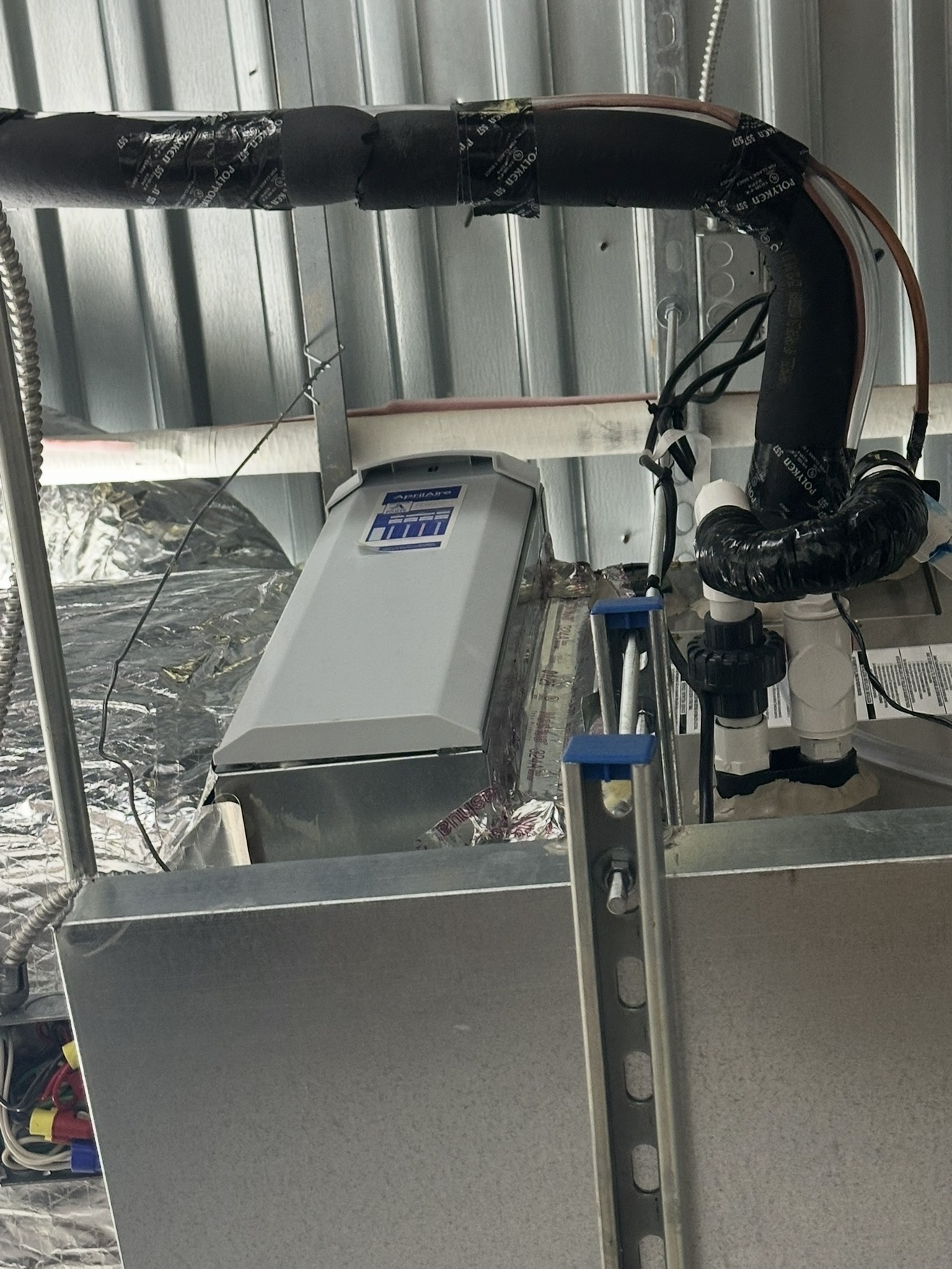
Cleanroom environmental monitoring during certification — Houston, Texas
Why Temperature and Humidity Matter in Cleanrooms
Before we get into construction observations, it’s worth understanding why temperature and humidity control is so critical in cleanroom environments — particularly for pharmaceutical compounding facilities.
USP 797 requires that sterile compounding environments maintain:
- Temperature — no higher than 20°C (68°F) in the compounding area to minimize microbial growth and protect the integrity of sterile preparations
- Relative humidity — no higher than 60% RH to inhibit microbial growth and prevent condensation on surfaces and equipment
USP 800 has similar requirements for hazardous drug compounding environments. Facilities that consistently struggle to maintain temperature and humidity within these limits face ongoing compliance challenges — and in Houston’s hot, humid climate, those challenges can be significant.
🌡️ Houston context: Houston’s climate is notoriously hot and humid — with summer temperatures regularly exceeding 95°F and relative humidity frequently above 80-90%. This makes proper HVAC design and construction decisions especially critical for cleanroom facilities in our region compared to facilities in drier climates.
Observation 1 — Cleanrooms Built Where Direct Sunlight Can Enter
One of the most consistent issues we observe is cleanrooms that have been built or located in spaces where direct sunlight can enter the room or heat the walls and ceiling significantly. This comes up in a few different ways:
- Windows in or adjacent to the cleanroom — even frosted or covered windows allow solar heat gain that can significantly increase the thermal load on the HVAC system
- Exterior walls with high solar exposure — cleanrooms built against south or west-facing exterior walls in Houston can experience substantial heat transfer through the wall, particularly in afternoon hours
- Roof-adjacent spaces — cleanrooms built directly under the roof without adequate insulation can experience extreme heat gain during Houston summers
- Poorly insulated exterior walls — insufficient wall insulation allows outdoor heat and humidity to continuously transfer into the cleanroom space
What we observe during certification is that facilities with these characteristics often struggle to consistently maintain the required temperature limits — particularly during summer afternoons when solar heat gain is at its peak. The HVAC system may be adequately sized for average conditions but unable to keep up during peak heat gain periods.
⚠️ What we see in the field: During summer certification visits in Houston, we have encountered cleanrooms where the temperature inside the compounding area was elevated above the USP 797 maximum of 20°C despite the HVAC system running at full capacity — with solar heat gain through exterior walls and ceiling spaces appearing to be a contributing factor.
Observation 2 — HVAC Systems Without Dedicated Humidity Control
The second most common temperature and humidity challenge we observe is cleanrooms served by HVAC systems that were not specifically designed to handle the humidity control requirements of a compliant cleanroom environment in Houston’s climate.
Standard commercial HVAC systems are designed to maintain general comfort conditions — typically 72-76°F and 40-60% RH. While these general comfort parameters may overlap with cleanroom requirements, standard commercial HVAC systems often lack the precise humidity control capability needed to reliably maintain relative humidity below 60% RH in Houston’s climate year-round.
Issues we commonly observe include:
- No dedicated dehumidification capability — the HVAC system relies solely on cooling coil condensation for dehumidification, which is often insufficient in Houston’s highly humid climate
- Oversized cooling systems — paradoxically, an oversized cooling system can actually worsen humidity control because it cools the space quickly and shuts off before adequately dehumidifying the air
- No humidity monitoring or control integration — the HVAC system has no humidity sensor feedback loop and cannot actively respond to rising humidity levels
- Single-pass air systems without dehumidification — systems that introduce large volumes of unconditioned outside air without adequate dehumidification treatment
💡 What works better — from what we observe: Facilities that consistently maintain humidity compliance in Houston tend to have HVAC systems with dedicated dehumidification capability — either through dedicated dehumidification coils, desiccant dehumidifiers, or separate standalone dehumidification units — rather than relying solely on standard cooling coil condensation.
Observation 3 — Standalone Dehumidifiers as a Retrofit Solution
We frequently see facilities that have addressed humidity challenges by adding standalone dehumidifier units to their cleanroom after construction. While this can be an effective retrofit solution, it comes with its own considerations that we observe during certification:
- Particle generation — some dehumidifier units can generate particles if not properly maintained, potentially affecting particle count test results
- Airflow disruption — improperly placed dehumidifier units can disrupt the carefully balanced laminar airflow patterns in the cleanroom
- Drainage considerations — dehumidifiers produce condensate water that must be properly drained — improper drainage can create moisture issues
- Maintenance requirements — standalone dehumidifier units require regular maintenance including filter changes and coil cleaning
When facilities ask us about humidity issues we observe during certification, we often find that a well-maintained, appropriately placed standalone dehumidifier with proper filtration can be a practical solution for existing facilities — while noting that addressing humidity control at the HVAC design stage is generally preferable for new construction.
Observation 4 — Inadequate Air Sealing and Vapor Barriers
Houston’s humidity doesn’t just enter through the HVAC system — it also infiltrates through gaps in walls, floors, ceilings, and around penetrations. During certification visits we sometimes observe facilities where humidity levels are difficult to control despite adequate HVAC capacity, and conversations with the facility team reveal construction-related factors such as:
- Gaps around conduit, pipe, and duct penetrations through cleanroom walls and ceilings
- Inadequate vapor barriers in wall and ceiling assemblies
- Air gaps around doors that allow humid corridor air to infiltrate
- Unsealed floor-to-wall junctions that allow moisture infiltration
⚠️ What we observe: Even small gaps in the cleanroom envelope can allow significant moisture infiltration in Houston’s climate — particularly during summer months when the outdoor dew point is extremely high. A cleanroom that is well-sealed against air and vapor infiltration is much easier to maintain within USP 797 temperature and humidity limits than one with envelope leakage.
USP 797 Temperature and Humidity Requirements at a Glance
| Parameter | USP 797 Requirement | Why It Matters |
|---|---|---|
| Temperature | No higher than 20°C (68°F) | Inhibits microbial growth, protects sterile preparations |
| Relative Humidity | No higher than 60% RH | Inhibits microbial growth, prevents condensation |
| Monitoring frequency | Continuously or at defined intervals | Required for USP 797 documentation compliance |
| Documentation | All readings must be recorded and retained | Required for state board of pharmacy inspections |
A Note on Monitoring and Documentation
Regardless of how well a cleanroom is constructed, USP 797 requires that temperature and humidity be continuously monitored and documented. During certification visits we verify that temperature and humidity are within acceptable limits at the time of testing — but ongoing compliance requires continuous monitoring systems that record readings throughout every operational day.
Facilities that struggle with temperature and humidity control should consider:
- Installing continuous temperature and humidity monitoring systems with data logging capability
- Setting alert thresholds below the USP 797 limits to provide early warning of approaching exceedances
- Documenting all exceedances and the corrective actions taken
- Reviewing temperature and humidity trends as part of the regular quality review process
How LabCertTech Can Help
While LabCertTech does not provide construction services or construction guidance, we do verify temperature and humidity conditions as part of every cleanroom certification visit. If your facility is consistently struggling to maintain USP 797 temperature and humidity limits, our certification results and field observations can help you and your HVAC contractor identify patterns and potential contributing factors.
We serve compounding pharmacies, hospitals, biotechnology laboratories, and research facilities across Houston, Texas and surrounding areas. Contact us today to schedule your cleanroom certification.
Ready to Schedule Your Cleanroom Certification?
Contact LabCertTech today — Houston’s veteran owned laboratory certification company.
Schedule a CertificationCleanroom Construction Temperature and Humidity USP 797 Cleanroom Certification Houston TX LabCertTech